
Hungry Ghosts
On Addiction & Gabor Maté's "In the Realm of Hungry Ghosts"

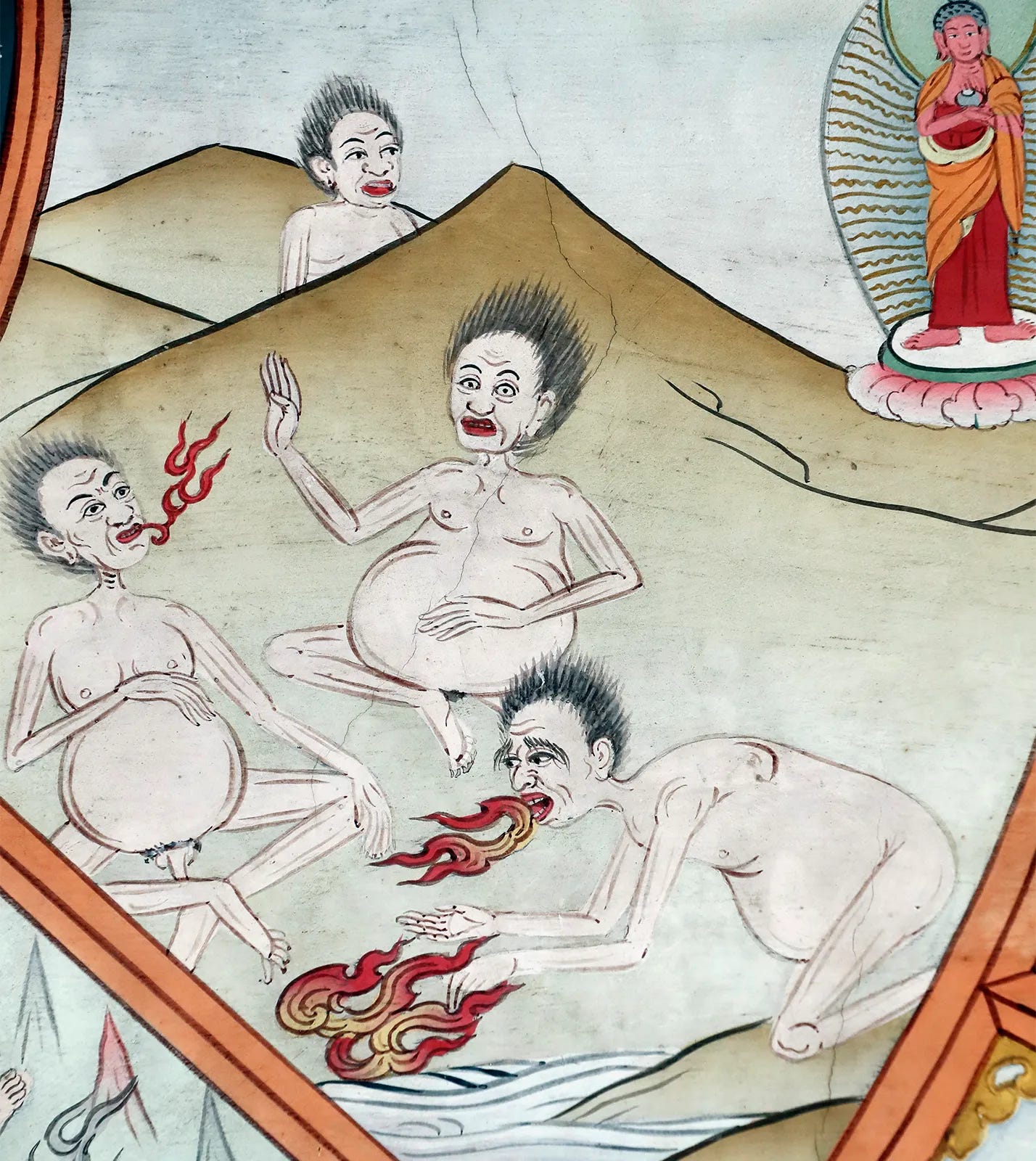
“At the core of every addiction is an emptiness based in abject fear. The addict dreads and abhors the present moment; she bends feverishly only toward the next time, the moment when her brain, infused with her drug of choice, will briefly experience itself as liberated from the burden of the past and the fear for the future—the two elements that make the present intolerable.” — Gabor Maté, from “In the Realm of Hungry Ghosts”
Gabor Maté’s work was introduced to me about 9 years ago. I was staying with a friend and her mom in Vancouver, Canada for a week or so, in desperate need of an escape from living with someone who was in active addiction. Or more accurately, I needed a break from who I became when I was living with someone in active addiction — not letting myself fall asleep, constantly checking on the person, and the incommunicable stress of obsessively wanting to keep someone alive. When I had physical distance from them, I knew it wasn’t in my power to help, so there was nothing I could do. Proximity burdened me with what no other human being can carry for another person.
When I shared a little bit about my situation with my friend’s mom, she told me about Gabor Maté’s work with addicts in Vancouver and pulled up one of his talks on addiction. This was the first time I had heard someone speaking about addiction with such understanding and clarity. I took in what he was saying, living somewhere in a corner within me before I returned to my personal hell.
In the years that followed — including years of my own recovery from the effects of that time and my experiences preceding it — I occasionally came across Gabor Maté’s work, whether I was displaying his books at the bookstore I worked at, or watching his illuminating talks on Israel’s genocide of Palestinians (Maté himself being a Holocaust survivor).
I’d been wanting to read his book In the Realm of Hungry Ghosts for years. I identified with the Buddhist concept of the hungry ghost, an entity tormented with a thirst that can never be satiated, no matter how much is consumed. Every time I saw the book it would give me a little nudge, but I would ultimately walk past it.
When I tabled at Litquake’s Small Press Book Fair this September, I spent a few minutes chatting with the vendors at the Berkeley-based North Atlantic Books table and there it was — In the Realm of Hungry Ghosts. I purchased it immediately knowing full well that my to-be-read stack was way too big already, and not knowing when I’d get the chance to read it, if at all. But the face-to-face conversations with the book’s publishing house led me to impulse-buy it anyway, hiding it away at the rock bottom of my book stack.
In November, while I was a resident volunteer at a Zen center for two weeks, I spent a lot of my break time reading in the library. And there it was again — In the Realm of Hungry Ghosts. After I finished reading Liberated Love, I picked it up and couldn’t put it down.
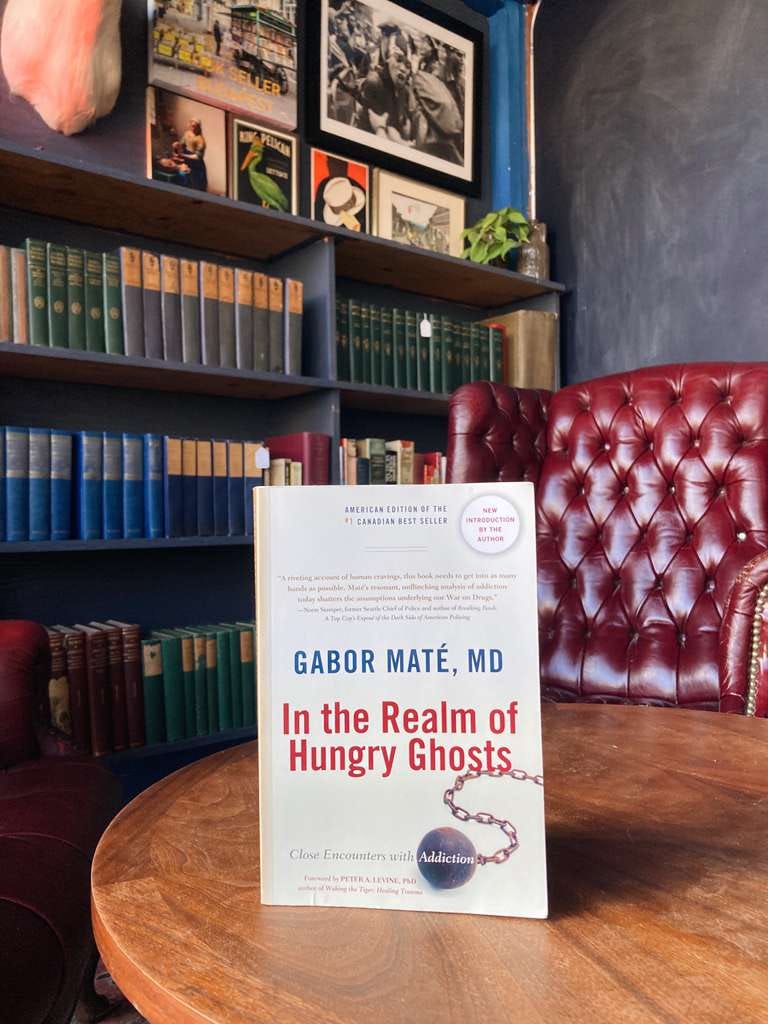
In Gabor Maté’s In the Realm of Hungry Ghosts, his expertise in working with addicts, understanding of the addiction process, and vision for addressing the addiction crisis through structural changes and greater social support is unmatched. He is also an excellent storyteller, making what could have been a dry, inaccessibly clinical explanation of addiction an engaging, empathetic, varied testimony of the addictive experience.
Adverse experiences — and/or a lack of positive, emotionally attuned experiences — in childhood, adulthood, and even stress in utero reduce the availability of our natural, internal regulators and reward system — of dopamine, endorphins, serotonin, and so on — and increase the amount of the stress hormone, cortisol. Thus, we are put at greater risk of substance addictions and behavioral addictions to make up for what is internally lacking; an attempt to self-medicate and restore balance above all costs. Often it is not so much a “high” that is being sought for as much as it is a desperation for normalcy, for life-affirming sensations and the relief from pain. From the extreme end of the spectrum — abuse, neglect, sexual assault, poverty, violence (including colonial violence), war, dislocation, sudden loss — to emotionally distant or stressed out caregivers or a sense of isolation contribute to the conditions that increase the likelihood of addiction.
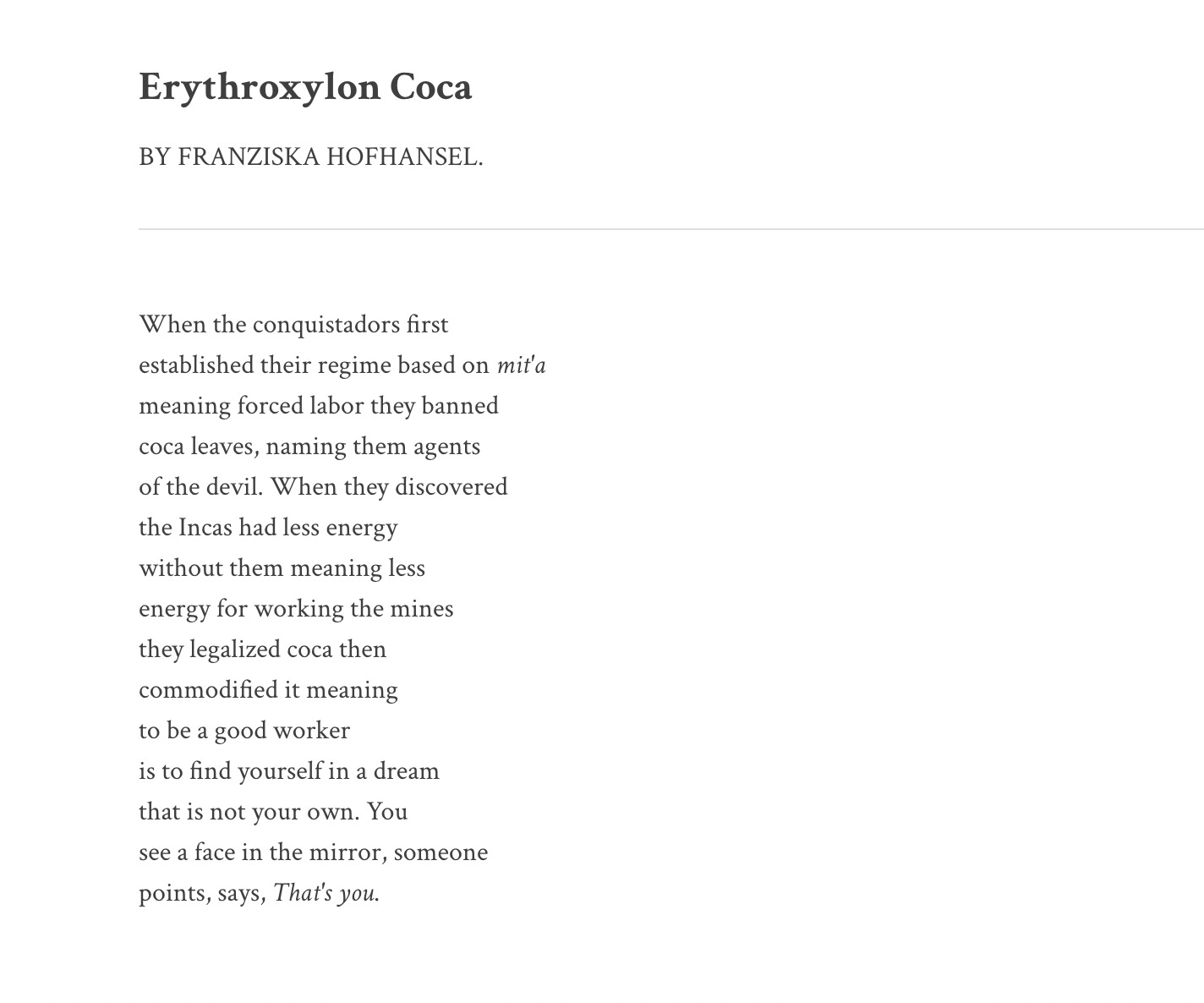
The negative effects of addiction compound on itself — the diminished availability of these internal chemicals also becomes a consequence of the addiction, making the dependence and cravings for the addictive substance or behavior increase. No matter the addictive “object” — alcohol and drugs, food, social media, television, work, gambling, romance, news, shopping, exercise, porn, videogames, etc. — the internal addiction process, Gabor Maté writes, is the same. Tolerance builds, craving increases, and withdrawal initiates when the addictive object is removed. The addictive object is interchangeable — an external stimulator of the internal chemicals that are yearned for.
This helps explain the whack-a-mole of addiction even when abstaining from specific addictive objects. For instance, while I’ve abstained from alcohol, substances, and nicotine for over 8 years, my obsessive-compulsive relationship to social media, love/fantasy/validation-seeking, television, work, and food have intermittently reared their heads. In other words, there is a transference, a change in the mere expression of addiction. It was not the object I really wanted — it was the rush of dopamine from external validation, or the numbing and pain relief of endorphins (whose etymology translates roughly to “internal morphine”), that my brain craved/craves.
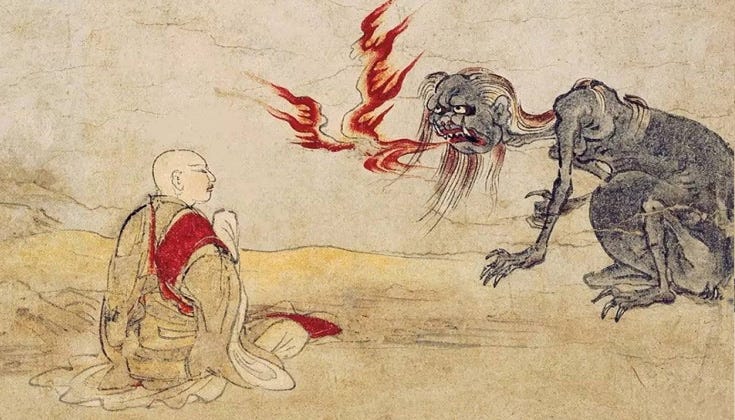
These behaviors are not inherently addictive or “bad” — addiction is “any repeated behavior, substance-related or not, in which a person feels compelled to persist, regardless of its negative impact on his life and the lives of others.” (Gabor Maté, In the Realm of Hungry Ghosts). In essence, we approach step one — we feel out of control, we become powerless over the behavior and our lives have become unmanageable — admitted or not. The window between impulse and action becomes a micro-sliver. The brain has already decided to act before we even become aware of the impulse, making the possibility of exercising conscious control extraordinarily narrow.
From Daniel Maté in a letter to his father, Gabor Maté: “Oddly enough, the addiction really isn’t over until I can see the emptiness (in a Buddhist sense) of the behavior: not good, not evil, and certainly not exciting, just an outside ‘thing’ I’ve been using unintelligently to dull the suffering edge of life. I say ‘unintelligently’ because no addiction in the history of the world ever alleviated more suffering than it ended up causing.”
I suggest anyone who is struggling with any form of compulsive use, struggling with the effects of a loved one’s addiction, or those who have an interest in addiction read this book. You will walk away with a deeper understanding and compassion for what so many of us are in the midst of — the realm of hungry ghosts where no amount of an external object can satiate us; the void, the God-sized hole that can only be filled with a power greater than ourselves — with love, community, presence, connection, spirituality, and a social and material fabric in which the majority of our needs are met.
Recap of books read in 2025 (in the order I read them):
You’re Not Crazy—You’re Grieving: 6 Steps for Surviving Loss by Alan D. Wolfelt
Tragic Victory: Learning to Navigate Life in Tough Times by Diane Davis
Zeal by Morgan Jerkins (the only fiction book I read this year, and my favorite book I read this year)
How to Not Always be Working: A Toolkit for Creativity and Radical Self-Care by Cody Cook-Parrott
When Angels Speak of Love by bell hooks
Liberated Love: Release Codependent Patterns and Create the Love You Desire by Mark Groves and Kylie McBeath
Tender Points by Amy Berkowitz
Works & Days by Gina Myers
Mercy by Lucille Clifton
Body Memory by Meriwether Clarke
The Do-It-Yourself Guide to Fighting the Big Motherfuckin’ Sad by Adam Gnade
Simple Steps to a Life Less Shitty by Adam Gnade
Facing Love Addiction: Giving Yourself the Power to Change the Way You Love by Pia Mellody
In the Realm of Hungry Ghosts: Close Encounters with Addiction by Gabor Maté